AI does not live in the cloud – it devours electricity: an energy debate for civil society
We often talk about artificial intelligence as something living "in the cloud" – light, invisible, without physical form. The truth is different: AI lives in enormous halls full of computers that devour electricity. And in 2026, electricity has become the great constraint. The industry body Uptime Institute now calls electricity "the single defining constraint" on data-center growth in the world. For nonprofits concerned with the environment, sustainability and society, this is a development worth understanding.
The big numbers
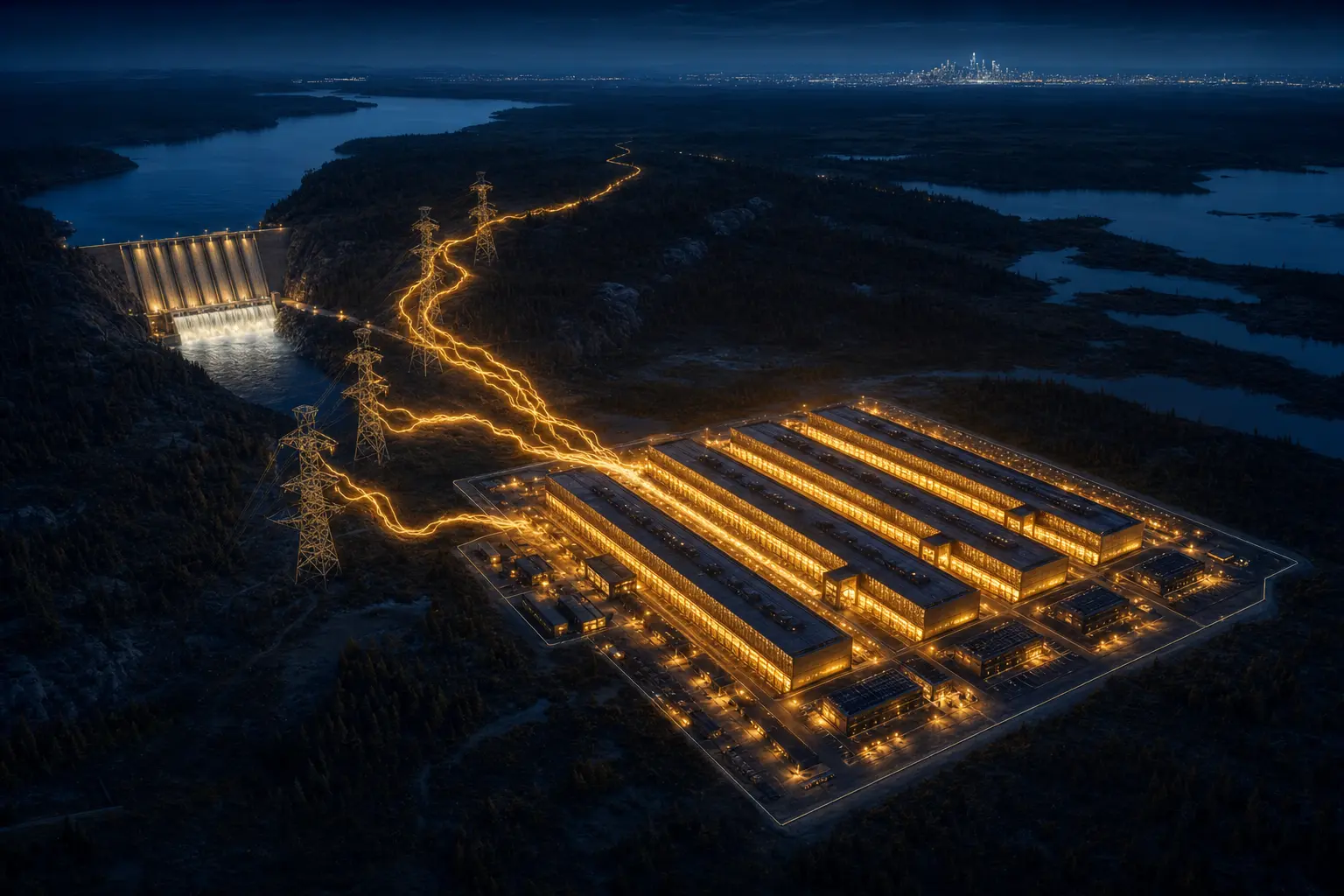
A single AI query can use up to 1,000 times more electricity than an ordinary web search. Europe’s data centers are expected to nearly double their electricity use by 2030, and globally data centers are approaching a consumption that would make them the world’s fifth-largest "electricity country," between Japan and Russia. Because city grids cannot deliver enough, data centers are moving out toward places with abundant power – and increasingly building their own power plants.
Why it concerns civil society
1. The environmental cost of using AI
AI is not free for the planet. Every time we use AI, it costs energy. That does not mean organisations should stop using AI – but it is a good reason to use it deliberately, and to choose providers running on renewable power. Use AI where it delivers real value, not for everything "because you can."
2. An allocation debate about the common good
Here lies the most important societal issue. In Norway, with our clean hydropower, we have become one of the world’s most attractive locations for AI data centers. That brings jobs and value creation – but also raises a fairness question: every terawatt-hour that goes to a data center is electricity that does not go to homes, local industry and the electrification of transport, and it affects the electricity price everyone pays. For organisations working on social justice, consumer protection or climate, this is a debate you have a natural voice in.
3. An occasion to ask the good questions
Civil society has an important role in keeping such trade-offs open and informed: who benefits when Norway’s common power is used for global AI services? How do we ensure the gains reach local communities, and that the cost is not passed on to ordinary people? These are questions you can raise in the public conversation.
A balanced stance
The point is not to be against AI or against data centers. The data-center industry can bring real value to Norway, and renewable power is far better than coal. But as with all technology – something we have written about in several contexts before – it is about awareness: using AI where it serves people and purpose, and ensuring that the big decisions about common resources are taken openly, fairly and with civil society at the table. The energy behind AI is invisible to most people. Making it visible is a task our sector is well suited to.