
The 2026 battery revolution: longer life, lower cost and less e-waste for your organisation
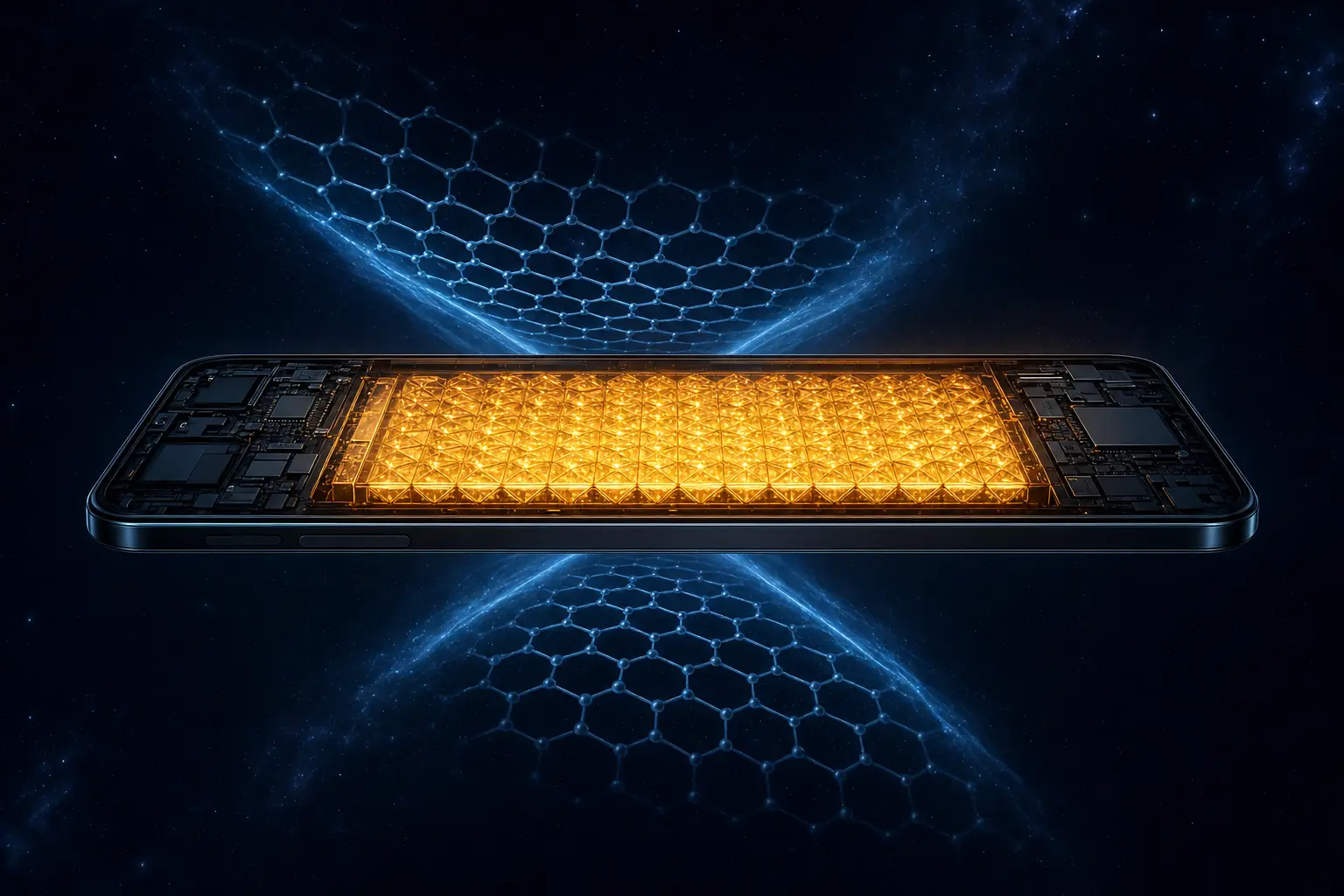
Not everything that matters to a small organisation is about artificial intelligence. This week we take a break from the AI news and look at something far more tangible: the batteries in the phones and tablets you already use every day. Because 2026 is the year the silicon-carbon battery went mainstream – a technology that delivers 30–50% more power in the same space. For organisations on a tight budget wanting to act more sustainably, that is good news in several ways.
What happened, briefly?
New phones store power in an improved material (silicon mixed into carbon) instead of pure graphite. The result: where last year’s models had 4,500–5,000 mAh, many 2026 models now have 6,500–7,300 mAh – some up to 10,000 mAh – without the phone getting thicker. In practice: phones and tablets that last far longer on a single charge.
Three reasons this concerns your organisation
1. Longer lifespan = lower cost over time
A common reason volunteers and staff replace a phone is that the battery no longer lasts the day. Devices with a larger battery reserve reach that point later, which can extend the equipment’s useful life and defer purchases. For an organisation counting every krone, a longer replacement cycle is a direct saving.
2. Less electronic waste
Equipment that lasts longer is equipment that reaches recycling less often. For organisations that care about sustainability – whether it is the core mission or just good practice – longer device life is a concrete, measurable environmental step. Combined with buying used or refurbished where possible, it can cut both cost and footprint.
3. Fieldwork without charging anxiety
If you do outreach – home visits, events, field registration – you know how critical a phone that lasts all day is. A larger battery can be the difference between a volunteer getting the job done or hunting for a power outlet in the middle of an activity.
Practical buying advice
- Look beyond the mAh figure. A higher number is not always better – batteries with a very aggressive silicon fraction can wear out faster. Ask about rated lifespan (number of charge cycles), not just capacity.
- Chinese brands lead for now. The technology is mainly in models from Xiaomi, OPPO, vivo, HONOR and OnePlus. Western brands will follow in 2026–2027.
- Consider used and refurbished. The most environmentally friendly – and often cheapest – option is to use the equipment you have as long as possible, and buy used when you must replace. Combined with the free software programmes for nonprofits, that keeps your technology budget down.
- Look after the battery. Avoid consistently charging to 100% and draining to 0%, and keep devices away from strong heat – simple habits that extend the life of the equipment you already have.
In a year full of dramatic AI news, this is a reminder that technological progress also comes in quieter, more practical forms – the ones that simply let your organisation do more with less.