
WiFi can "see" you without a camera: an invisible privacy frontier for civil society
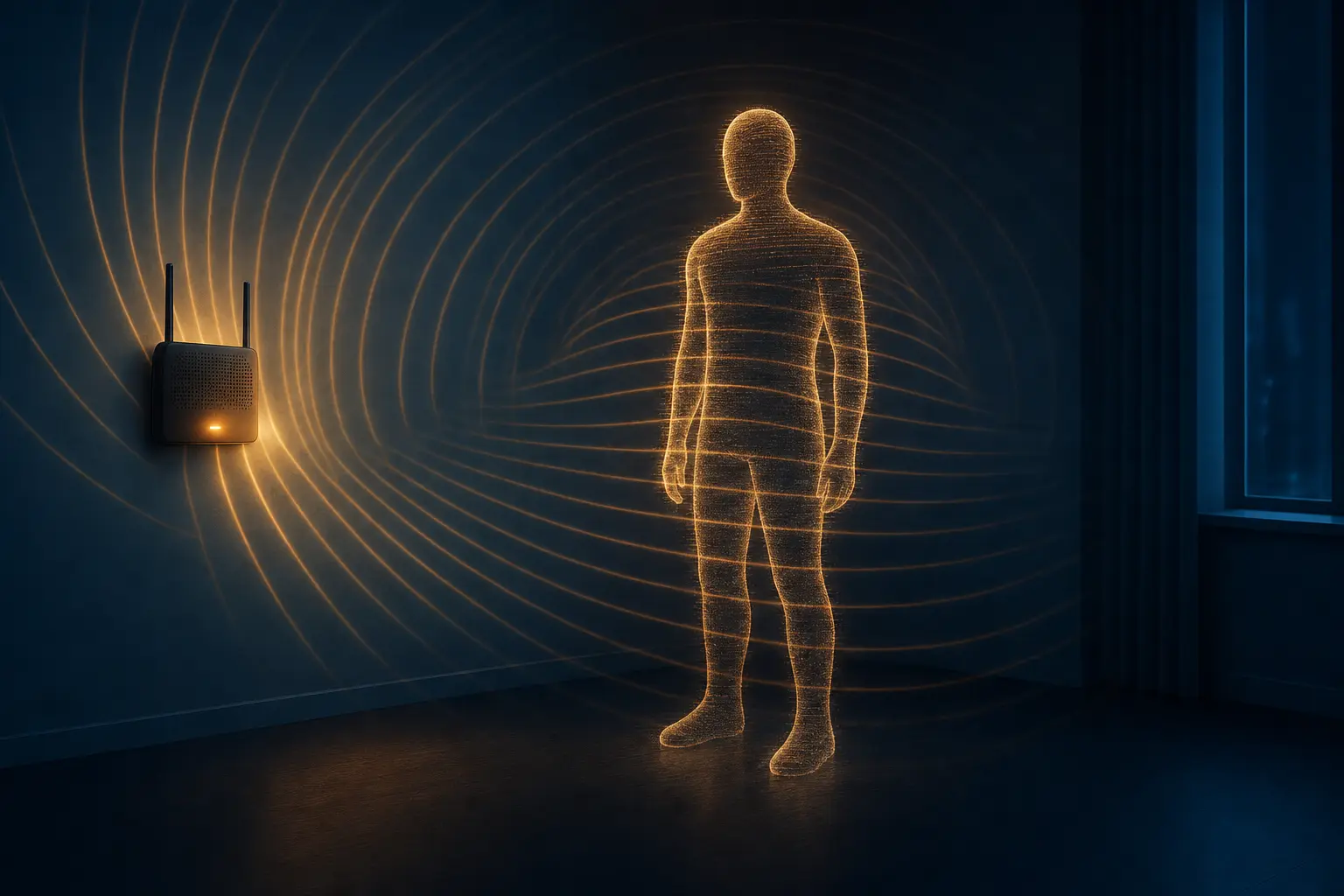
Imagine being recognised and tracked in a room without a camera, without carrying a phone – even with the phone switched off. New research from Germany’s Karlsruhe Institute of Technology shows it is possible: ordinary WiFi can identify a specific person with near-100 percent accuracy, by analysing how the body disturbs the radio signals in the room. The researchers themselves call it a privacy attack.
For civil society – organisations that protect privacy, vulnerable groups and digital rights – this is a development worth following closely. Not to spread fear, but because it touches something fundamental: the right to move without being surveilled.
Why this is different
We have learned to think of privacy as something we "give away" – data we share, apps we install, consents we click. WiFi identification is something else entirely:
- It is passive. You do not have to do anything. You walk into a room, and the infrastructure already there recognises you.
- There is no device to leave behind. The advice "leave your phone at home" does not help – it is your body that is being read.
- It is invisible. No camera to spot, no screen glowing. Just the WiFi that is everywhere.
Two sides – and a difficult dilemma
At the same time, the technology has a good side that makes it hard to dismiss. WiFi "sensing" can raise the alarm when an elderly person living alone falls – without a camera in the bedroom or bathroom, preserving dignity. It can be used for safety and care. The dilemma is that exactly the same ability that catches a fall can also be used to track and identify people without their knowledge. You cannot easily ban one without losing the other.
Civil society’s role
- Demand transparency. If the technology is put to use – in shops, workplaces, public spaces – people have the right to know. Hidden sensing should be unacceptable.
- Distinguish care from surveillance. Detecting a fall is not the same as identifying who people are. The line between "noticing presence" and "recognising a person" is crucial, and should be clearly regulated.
- Protect the vulnerable. For people fleeing violence, whistleblowers, or others who depend on moving anonymously, invisible tracking can have serious consequences. Their needs must enter the debate early.
- Be present when the standards are set. The technology is being standardised internationally right now (in the WiFi standard 802.11bf). That is when the controls should be built in – not afterwards.
This is still research, not something your router does today. But the direction is clear, and the technical obstacles are falling. As with the other privacy issues we have written about recently – from face scanning to age assessment – the point is the same: new technology that touches people’s privacy must be met with awareness and open debate, not simply adopted because it is possible. Civil society has a key role in keeping that conversation alive.