Nvidia Vera Rubin: 288GB HBM4 og 22 TB/s - Neste generasjons AI-chip i produksjon
Nvidia has begun production of its Vera Rubin architecture, the next-generation AI accelerator that sets entirely new standards for performance, memory capacity, and bandwidth. Named after the pioneering astronomer who provided critical evidence for dark matter, the Vera Rubin GPU represents Nvidia's most ambitious chip to date — and it arrives at a moment when the AI industry desperately needs more compute.
The Specifications That Matter
The Vera Rubin architecture brings several headline-grabbing improvements over its predecessors:
- 288GB HBM4 memory: A massive leap from the H100's 80GB and the H200's 141GB. This means AI models with hundreds of billions of parameters can fit entirely in a single GPU's memory — eliminating the need for complex multi-GPU sharding in many scenarios.
- 22 TB/s memory bandwidth: This is roughly 6.5x the bandwidth of the H100 (3.35 TB/s). The memory wall — the bottleneck where the processor waits for data — has been one of the most persistent challenges in AI hardware. Vera Rubin effectively demolishes it.
- 336 billion transistors: Nearly double the transistor count of the H100 (80 billion). More transistors mean more compute units, larger caches, and fundamentally more processing power per chip.
- Next-generation NVLink: Improved chip-to-chip interconnect for multi-GPU configurations, critical for training the largest frontier models.
These are not incremental improvements. The Vera Rubin represents a generational leap that will reshape what's economically and technically feasible in AI.
Samsung Wins the HBM4 Race
In a surprising development, Samsung has beaten SK Hynix to mass production of HBM4 memory for Nvidia's Vera Rubin platform. This is notable because SK Hynix has dominated the high-bandwidth memory market for several years, supplying the HBM3 and HBM3e chips used in the H100 and H200.
Samsung's ability to ramp HBM4 production first — with deliveries starting in mid-February 2026 — marks a significant shift in the memory supply chain. Industry analysts suggest Samsung invested heavily in its manufacturing processes specifically to win this contract, viewing Vera Rubin as a strategic opportunity to reclaim market share.
For Nvidia, having a second major HBM supplier reduces supply chain risk and potentially improves pricing leverage. For the broader industry, it signals that competition in the AI hardware supply chain is intensifying — which should ultimately benefit end users through better availability and lower costs.
What This Means for AI Training Costs
The economics of AI are about to change significantly. Training a frontier large language model in 2024-2025 cost anywhere from $50 million to over $500 million, depending on the model size and training approach. A substantial portion of that cost was GPU compute time.
Vera Rubin's specifications suggest several ways these costs could decrease:
- Fewer GPUs needed: With 288GB of memory per chip, models that previously required 8-16 GPU sharding may fit on 2-4 GPUs. Fewer GPUs means less interconnect overhead, less power consumption, and lower total cost.
- Faster training throughput: The 22 TB/s bandwidth means GPUs spend less time waiting for data and more time computing. Training runs that took weeks could complete in days.
- Better inference economics: For deployment, larger memory per GPU means serving bigger models with fewer machines — directly reducing the cost per query that AI service providers pass on to customers.
However, history suggests that lower per-unit costs tend to increase total spending rather than reduce it. As AI compute becomes cheaper, organizations train larger models, run more experiments, and deploy AI to more use cases. Nvidia CEO Jensen Huang has repeatedly predicted that the world will spend trillions of dollars on AI infrastructure — Vera Rubin may accelerate that trajectory.
Vera Rubin vs. H100: A Generational Comparison
To appreciate the scale of improvement, consider a direct comparison:
- Memory: H100 offers 80GB HBM3; Vera Rubin delivers 288GB HBM4 — a 3.6x increase
- Bandwidth: H100 provides 3.35 TB/s; Vera Rubin delivers 22 TB/s — a 6.5x increase
- Transistors: H100 has 80 billion; Vera Rubin has 336 billion — a 4.2x increase
- Process node: H100 used TSMC 4nm; Vera Rubin uses TSMC 3nm with advanced packaging
The H100 was already a transformative chip — it powered the training of GPT-4, Claude 3, Gemini, and most other frontier models. Vera Rubin promises to enable the next generation of AI systems that will make today's models look modest by comparison.
The Competitive Landscape
Nvidia's dominance in AI accelerators is well-established, but competitors are not standing still. AMD's MI350X is expected later in 2026 with its own HBM4 implementation. Intel's Falcon Shores is in advanced development. Google continues to iterate on its TPU architecture, and a wave of AI chip startups — including Cerebras, Groq, and SambaNova — are targeting specific niches.
Despite this competition, Nvidia's advantage extends beyond raw hardware. Its CUDA software ecosystem, built over nearly two decades, creates enormous switching costs. Most AI frameworks, libraries, and tools are optimized for Nvidia GPUs first. This software moat may prove even more durable than any hardware specification.
That said, the AI hardware market is large enough to support multiple winners. Different workloads — training vs. inference, cloud vs. edge, dense vs. sparse models — favor different hardware architectures. The Vera Rubin excels at the high-end training and large-model inference segments, but other players may find success in adjacent markets.
Implications for Norway and the Nordics
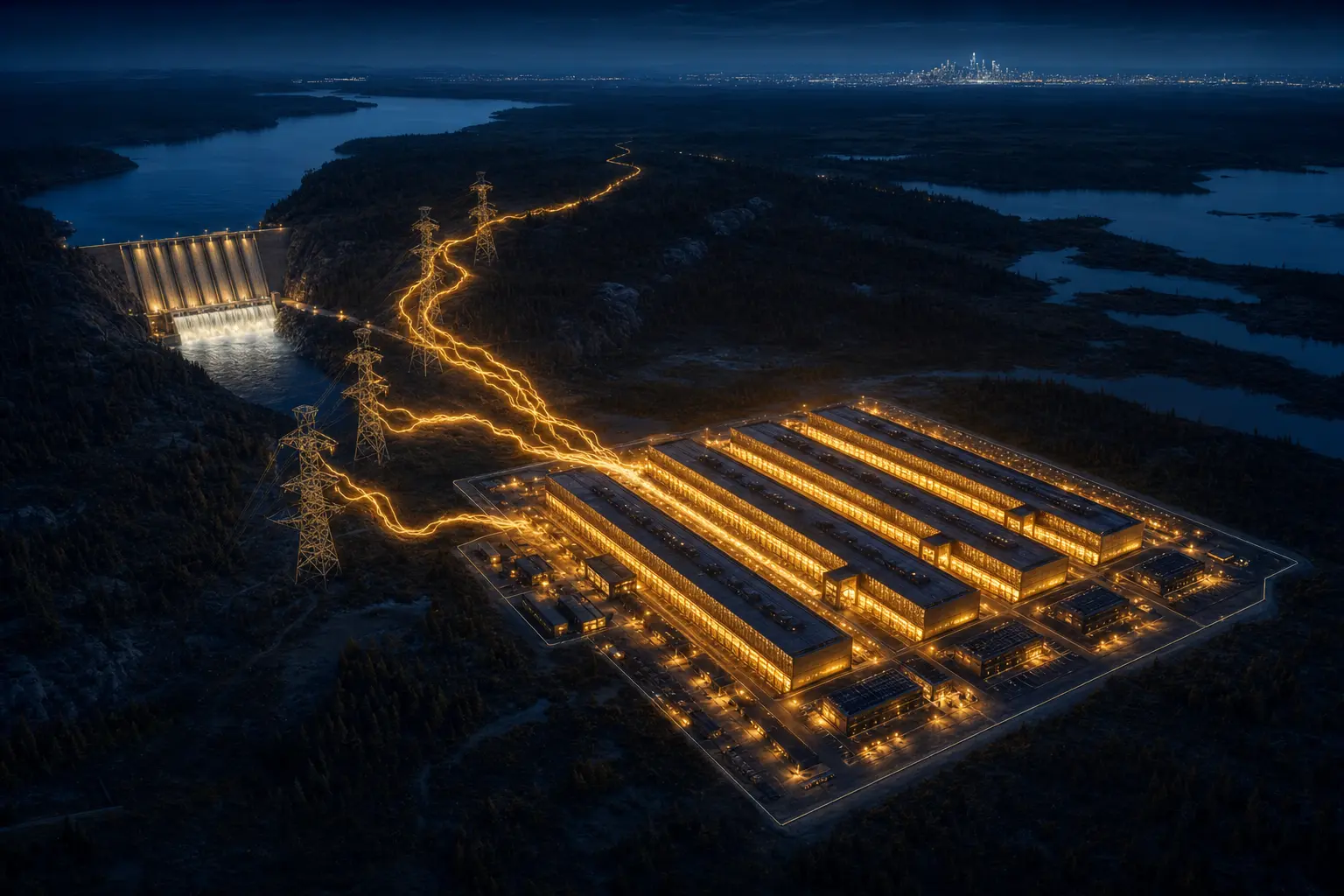
Norway has unique advantages in the AI infrastructure race. The country's abundant renewable energy — particularly hydroelectric power — makes it an attractive location for energy-intensive AI data centers. Several Norwegian municipalities are actively courting data center investments, and the arrival of more efficient hardware like Vera Rubin makes these investments more compelling.
The Norwegian government has signaled increased interest in sovereign AI infrastructure. Having access to cutting-edge hardware like Vera Rubin could enable Norwegian research institutions and companies to train competitive AI models domestically, rather than relying entirely on American cloud providers. The University of Oslo, NTNU, and SINTEF have all expanded their AI compute capabilities in recent years.
For Norwegian businesses using AI services, Vera Rubin's impact will be felt indirectly through lower inference costs and more capable models. Companies that build on cloud-based AI APIs should see better performance and potentially lower prices as cloud providers upgrade their GPU fleets.
Norway's Green Platform initiative and similar programs could also benefit. More efficient AI hardware means the environmental footprint per computation decreases, aligning AI adoption with Norway's sustainability goals. The combination of green energy and efficient hardware could position Norway as a leader in sustainable AI infrastructure.
What Comes Next
Vera Rubin is entering production now, with general availability expected by mid-2026. Cloud providers like AWS, Azure, and Google Cloud will likely offer Vera Rubin instances within months of launch. For organizations planning their AI infrastructure investments, the question is no longer whether to adopt next-generation hardware, but how quickly they can integrate it.
The AI hardware race shows no signs of slowing. Nvidia is already reportedly working on its successor architecture — rumored to be codenamed after another scientist. In this industry, today's breakthrough is tomorrow's baseline. But for now, Vera Rubin sets the standard for what AI hardware can achieve.